
|
By Pravin Jeyaraj On the day that Labour announced its proposals for the "the Future of Work", which include the right to flexible working from day 1, BBC's Radio 4's Today Programme spoke to two zero hours workers about their experiences.  Heidi Henders, 24, worked in retail on zero hours contract. Although she had no guaranteed hours, she consistently worked for around 20 hours a week. She was sacked when she spoke up about unfair treatment: I'd worked there for about a month and we had a dispute about uniforms. They were saying we have to provide our own uniform, including shoes. So I spoke up and said, 'No, that's illegal, you can't do that'. And then I was let go instantly, because I didn't have a contract, so I had no rights to challenge it [the dismissal]." When asked about what should the future of work" entail, Heidi said: I think a lot of it comes down to stability and security. I don't think the problem is work being flexible. People should be able work and earn enough money and also have time to exist outside of their job. Also, I think, people's rights need to be recognised. To do that, people need to come together into unions and unions need to recognised across every industry, especially in hospitality and other kinds of precarious work." Malo Manning, 21 is a customer support officer for the Home Office. She was guaranteed a minimum of six hours a week but usually worked 20-25 hours a week. In her case, the flexibility of a zero hours contract suited her, as she was a student and had additional financial support. But she said there were definite problems with zero hours contracts: I think there should be tighter regulations about the idea of moving existing employees from full-time contracts to zero hours contracts, because that would allow companies to usher them from a full set of rights to 'self-employed', which strips away a lot of [those rights]. I also think that, instead of zero hours contracts, there should be this idea of a basic minimum set of hours and flexibility surrounding that, but I think the idea of the zero hours contract itself should really be looked at because it is a breeding ground for exploitation. Zero Hours Justice would question whether it was right for people like Heidi and Malo to be on zero hours contracts in the first place, as they were working roughly the same number of hours each week. Given that the hours were relatively predictable, they should have been on an appropriate fixed hours contract. Heidi's treatment was particularly outrageous. If she had been working for her employer at least two years, then, being sacked for speaking up might have been unfair dismissal. It is also wrong that Heidi's then employer had not given a written contract. Any worker or employee, whether they are on a zero hours contract or not, has a legal right to written terms or an employment contract. But, more importantly, the absence of a written document does not necessarily mean that there was no contract. The full recording of the segment on Radio 4 Today can be listened to here: https://www.bbc.co.uk/sounds/play/m000y6n0#t=2h09m59s.
By Pravin Jeyaraj Zero hour contracts have always bee a source of job insecurity, with hours that are not guaranteed and that can be cancelled at short notice. But, according to new research from the Trade Union Congress and Race on the Agenda, zero hour workers of BAME origin are more likely to affected by the lack of work, compared to white zero hour workers. 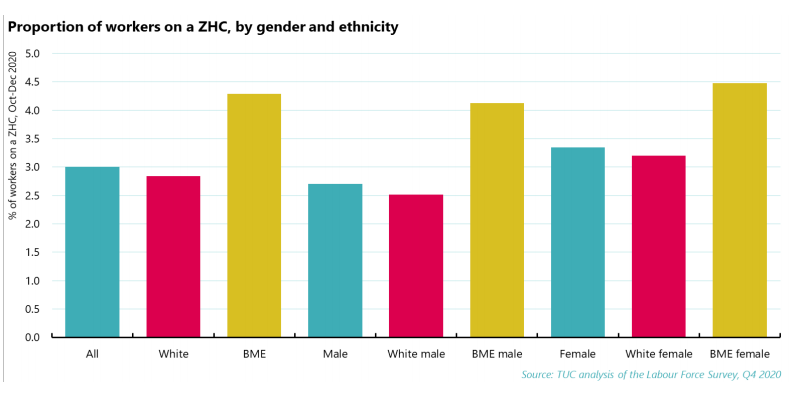 The research indicates that the proportion of zero hour workers of BAME origin (around 4.2%) is almost twice as high as the proportion of white zero hours workers (around 2.8%). Amongst male zero hours workers, 4.1% are of BAME origin, compared to 2.5% who are white. Amongst female zero hours workers, 4.5% are of BAME origin, compared to around 3.2% who are white. Supporters of zero hours contracts highlight the flexibility available to both employers and workers, who can choose to fit work around other commitments. Yet, according to a survey of 2,523 workers, including 435 of BAME origin, 50% of BAME workers have been allocated shifts and 45% have had shifts cancelled at less than 24 hours notice. This makes it difficult to plan financially or manage other responsibilities such as childcare. On top of that, 40% of BAME workers on variable-hours or zero hour contracts reported that had been threatened with the loss of shifts if work was turned down, compared to 25% of white workers. 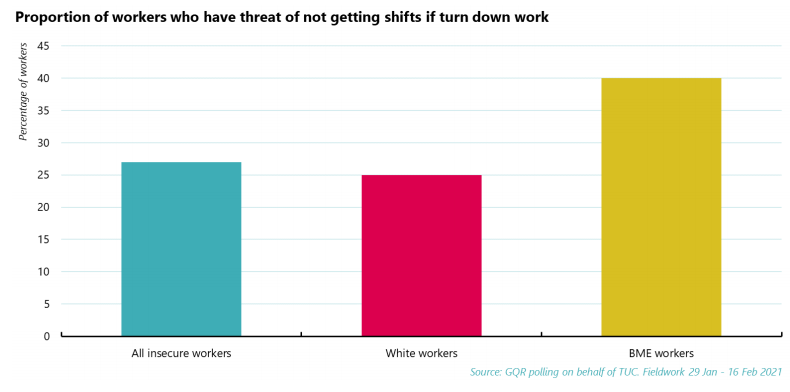 Across the board, zero hours workers were likely to be refused a more stable contract when they asked, regardless of ethnicity. However, of those who asked for and given a more stable contract, less than 5% were white and over 10% were of BAME origin. Of those who asked for and were refused a more stable contract, around 10% were white and over 20% were of BAME origin.
By Pravin Jeyaraj The engineering magazine New Civil Engineer have reported that three major public sector organisations have introduced measures to make sure suppliers do not use zero hours contracts or, if absolutely necessary, use them appropriately. The overwhelming reason for the change in supplier procurement policy appears to be one of safety concerns. Academic research has previously highlighted the risk to health of working on a zero hours contract.
By Pravin Jeyaraj
According to Office for National Statistics, between 2000 and 2012, the proportion of people in employment that were on zero hour contracts was less than 1%. In the early part of the millennium, the number of zero hours contracts actually fell, reaching a record low in 2004-2005, before increasing again. Last year, in the middle of a global pandemic, the number of people on zero hours contracts broke through the one million barrier. In the 2019 election, the Conservative Party's pledged to introduce an employment bill that would include the right to a more secure contract for zero hour workers. In an implicit criticism of the government's failure to meet this manifesto commitment, the leaders of the G7 engagement groups wrote in their letter to the prime minister that "this isn't the time for leadership in name only".
By Pravin Jeyaraj
Zero Hours Justice would argue that the right time is now, as we emerge from a pandemic that has had a devastating effect on work and income of those on zero hours contracts. For the past year or so, we have been contacted by many zero hours workers, who have ended up working predictable hours or employment patterns over many years, whilst being on a contract that does not guarantee these hours. They have seen their work disappear overnight, not been furloughed or been taken off furlough without the prospect of work and even made redundant without redundancy pay. 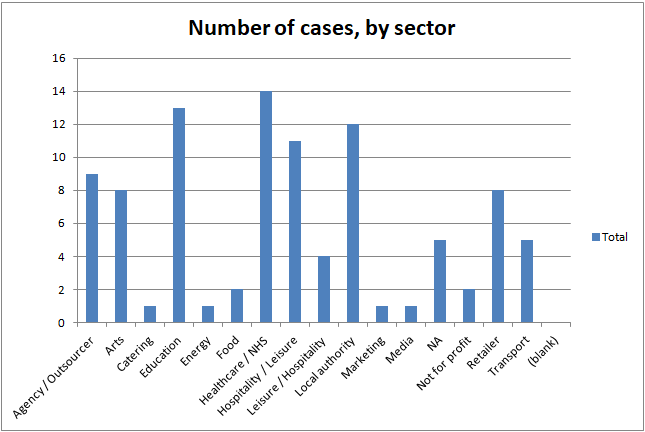 Distribution of Zero Hours Justice cases, by industry sector, in last 18 months Indeed, according to the latest employment figures from the Office for National Statistics, a third of all zero hours workers are actually working full-time and the 62% who are working part-time end up working an average of almost 25 hours a week. "Levelling up" should not just about spending more on infrastructure outside of London and the South-East. It should be about making sure that all workers have the security of work and income that will allow them to spend. If zero hours workers are working predictable hours and have come to expect that, they really should be on a permanent contract and have the rights that come with it.
By Pravin Jeyaraj At least 20% of the zero hour workers in the United Kingdom work for the Welsh public sector, according to research carried out by Zero Hours Justice. The research reveals that Wales makes up 8.4% of zero hours workers in UK universities, 7.1% in local authorities and 4.1% in NHS Trusts. Yet, according to research carried out by the trade union Unison, 70% of people in Wales do not think that firms receiving public money should be allowed to use staff on zero hours contracts. Furthermore, according the latest figures from the Office for National Statistics, the proportion of people on zero hours contracts in Wales is just 2.7%. The UK average is just 3%.
We agree that one should question the morality of using taxpayers' money to pay for cheap, insecure labour. But it would surely be hypocritical of public sector employers to only sign contracts with firms that do not use zero hours contracts, without looking at their own recruitment practices. Earlier this month, Scottish Labour pledged to stop private sector employers who use zero hour workers from benefitting from contracts with the public sector, without asking whether the public sector is just as much a part of the problem. The study from Zero Hours Justice is based on the Freedom of Information requests made to 799 universities, local authorities and NHS Trusts during the last 12 months. It did not look at other types of public sector organisations, such as schools or police forces.
By Pravin Jeyaraj
According to the latest data from the Office for National Statistics, 22% of those working in the accommodation and food industry and 10% of those in the wholesale and retail sectors are on zero hour contracts. Nowhere was this felt more acutely than in the food sector itself. A survey of the food sector by the Bakers, Food and Allied Workers' Union, in which 227 people responses, found that:
By Pravin Jeyaraj
The death rate from Covid is particular stark amongst male insecure workers, at 51 per 100,000 people aged 20-64, compared to 24 per 100,000 people in less insecure occupations. However, even for female insecure workers, the mortality rate was 25 per 100,000 people, compared to 13 per 100,000 in less insecure occupations. In addition to a greater likelihood of being on the frontline against Covid, the higher mortality rate amongst precarious workers has been driven by the reality that they are only paid if they work. No work, even if they are sick, means not being able to pay bills. Statutory sick pay is too low to to make up for the income lost from not working and many insecure workers may not even be eligible for it. According to a poll conducted by BritainThinks for the TUC, 67% of insecure workers said they receive no sick pay at all, compared to 7% of those in secure work. We agree with the TUC's assessment that many employers are encouraged treat insecure workers as "disposable labour" due to the lack of employment rights. Of the zero hours workers who have contacted us in the past 12 months or so, the vast majority have complained about simply seeing their work disappear without being furloughed. We have seen examples of good employers who have furloughed zero hours and casual workers. Yet, other employers have simply pointed to the lack of any contractual obligation to pay zero hours workers for not working. After all, if an employer doesn't have to pay staff, why would they, especially when they are unable to open as usual.
nearly 40% of zero hour workers polled offered work with less than a week's notice before shifts15/4/2021
By Pravin Jeyaraj
Of this group, 62% said that they were offered work with less than a week's notice their work schedules. 12% of this group, amounting to 7% of all working adults, were given less than 24 hours notice.
The situation is even worse in London, where almost half (48%) of all workers received less than a week's notice of work schedules. Whilst some will value the flexibility offered by zero hours contracts, for many, not knowing whether there will be work from week to week - or even, from day to day - would create an inordinate amount of insecurity and stress. If you do not know whether you will have paid work each week, it is difficult to know whether you will be able to pay your bills or even plan your life with a degree of certainty. At the same time, if you are earning below the Living Wage, the choice can often be between accepting the offers of work, rescheduling other appointments or rearranging childcare. Zero Hours Justice's minimum criteria is that employers who use zero hour contracts should offer work with at least two weeks' notice and to pay some for compensation for agreed shifts cancelled at short notice. In addition, we urge them to review the actual hours worked of each zero hour worker and start a conversation with the worker about moving over to a fixed hours or minimum hours contract that accurately reflects hours worked. Under its Living Hours programme, the Living Wage Foundation requires employers to both pay a real Living Wage and commit to providing at least four weeks’ notice for every shift, with guaranteed payment if shifts are cancelled within this notice period. Living Hours employers also provide a guaranteed minimum of 16 working hours every week (unless the worker requests otherwise), and a contract that accurately reflects hours worked. By Pravin Jeyaraj Scottish Labour has pledged to tighten public procurement rules so that any private sector employer who uses zero hours contracts cannot benefit from contracts with the public sector. But, as attractive as the policy might sound, the party would be better off looking at the employment of zero hours workers within the public sector itself. According to research carried out by Zero Hours Justice, local authorities in Scotland directly employ the largest number of zero hour contract workers, compared with other regions in the United Kingdom. The data was obtained via Freedom of Information requests to universities, local authorities and NHS employers, with a response rate of 94%. 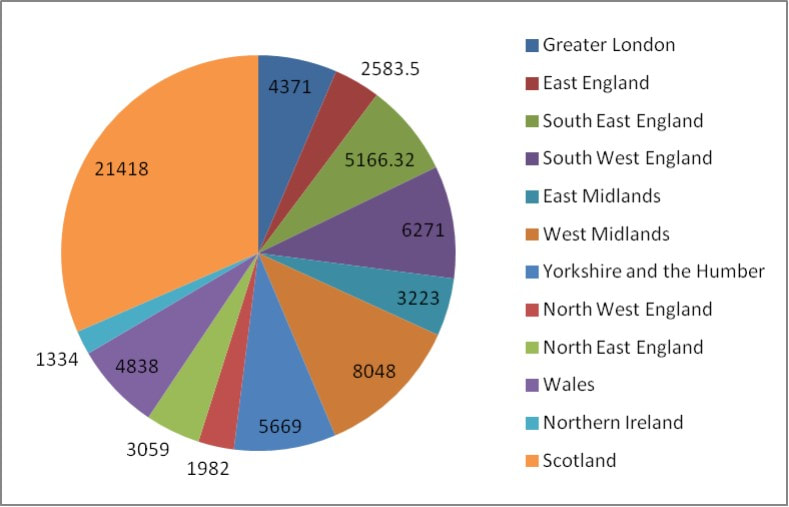 Zero Hours employment in UK local authorities, 2020-2021 The data revealed that, of 67,962 zero hours workers directly employed by local authorities in the UK, over 21,000 (31%) of them worked for Scottish local authorities. By comparison, the second highest number, 8048, worked for local authorities in the West Midlands, a share of just 11%. Despite the predominance of zero hours contracts in Scottish local authorities, compared to the rest of the UK, most directly-employed zero hours workers in universities, local authorities and NHS trusts are in England. This is not surprising, given that England makes up for 82% of the population of the UK. 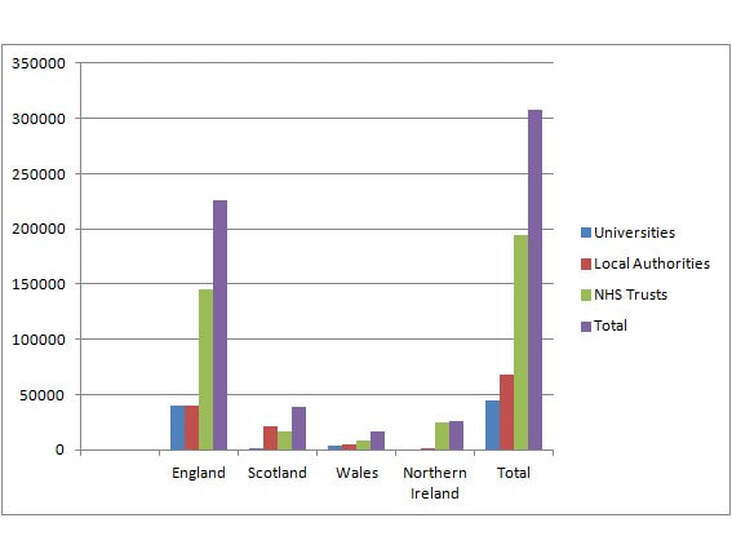 National breakdown of zero hours contracts in the UK, 2020-2021 English universities and NHS Trusts directly employ 89% (40,129) and 74% (145,226) of zero hours workers UK universities and NHS employers respectively. By comparison, Scottish universities directly employ just 1% of zero hours workers in UK universities. Scottish NHS Trusts employ 8% of the zero hours workers in the NHS.
|
contactFor press enquiries or permission to reuse content, please contact: Archives
January 2024
CATEGORIES
All
|






 RSS Feed

|
Company No: 12417909 Registered Office: 38 Coney Street, York, Y01 9ND
|